About organs · 6 November 2026 · 5 min read
How do organs actually work?
Thousands of pipes, a single bellows and the mechanics that connect it all to the organist's fingers. A short guide to the inside of the king of instruments.
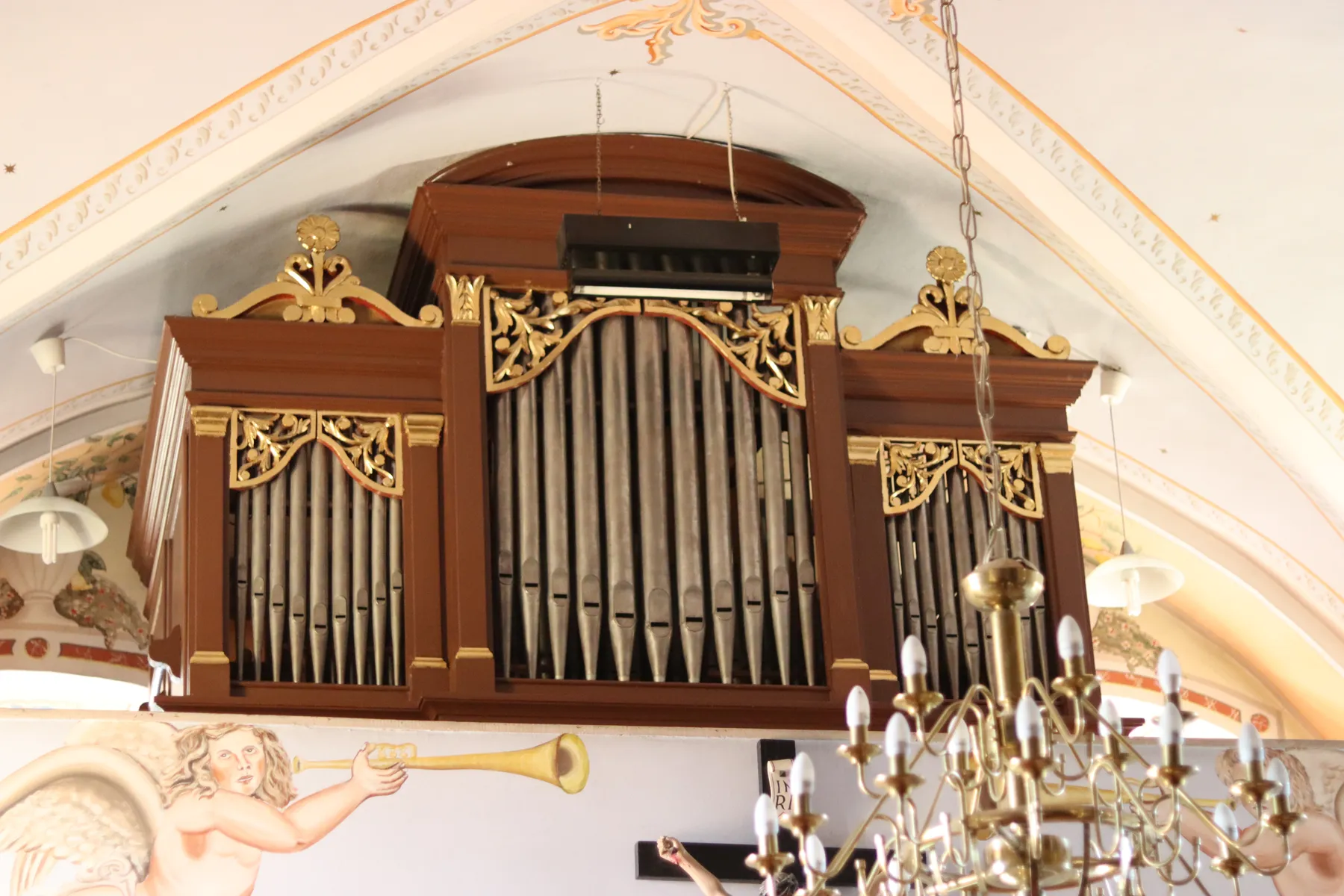
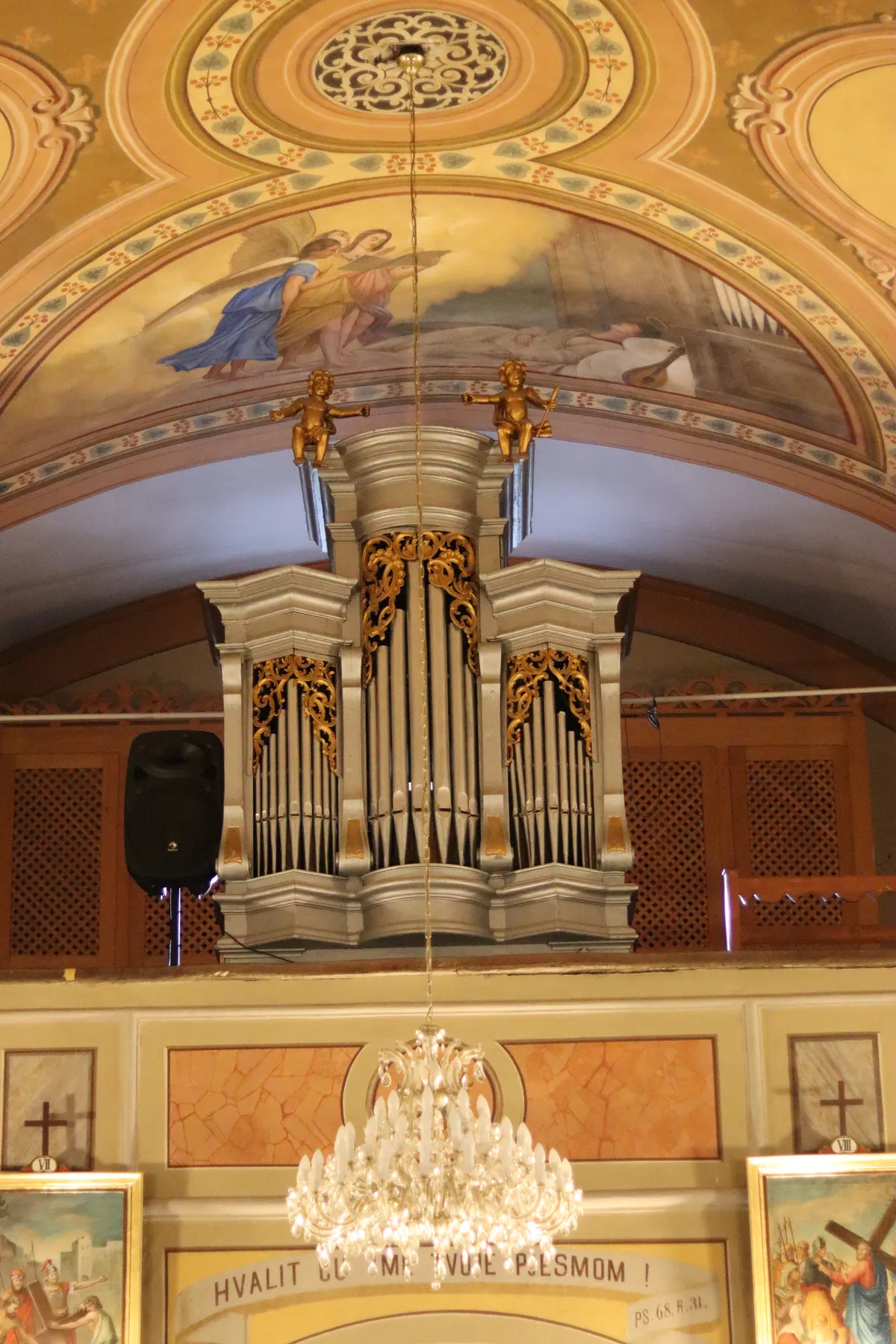
When you stand in a church and look towards the choir loft, you see only the facade: a row of shining pipes in a decorated case. Behind it hides an instrument that has several hundred pipes even in a small parish church, and several thousand in cathedrals. Here is what happens from the moment the organist presses a key.
Air: blower, bellows and wind trunks
The organ is a wind instrument. In the past the air was pumped by an assistant, the calcant, using feet or hands. Today a quiet electric blower does it. Its air enters the bellows, which has a single task: to keep the pressure steady. If the pressure wavers, so does the tone. From the bellows the air travels through wooden trunks to the wind chests.

The wind chest: the heart of the instrument
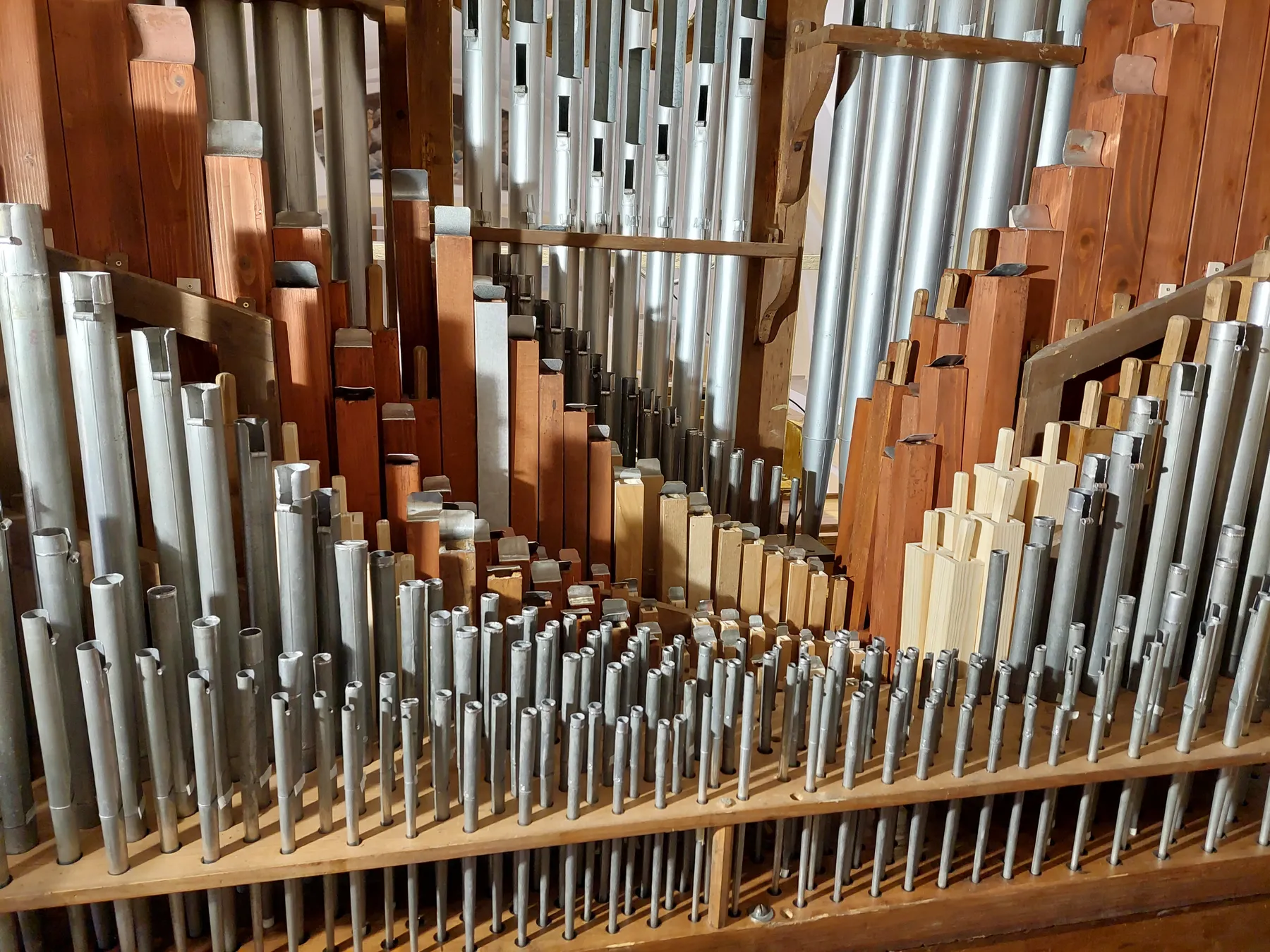
The wind chest is a wooden box on which the pipes stand. It contains valves that decide which pipe gets air. One system selects the note, that is the key, and another the stop, that is a row of pipes with the same tone colour. A pipe speaks only when both are open.
Pipes: flue and reed
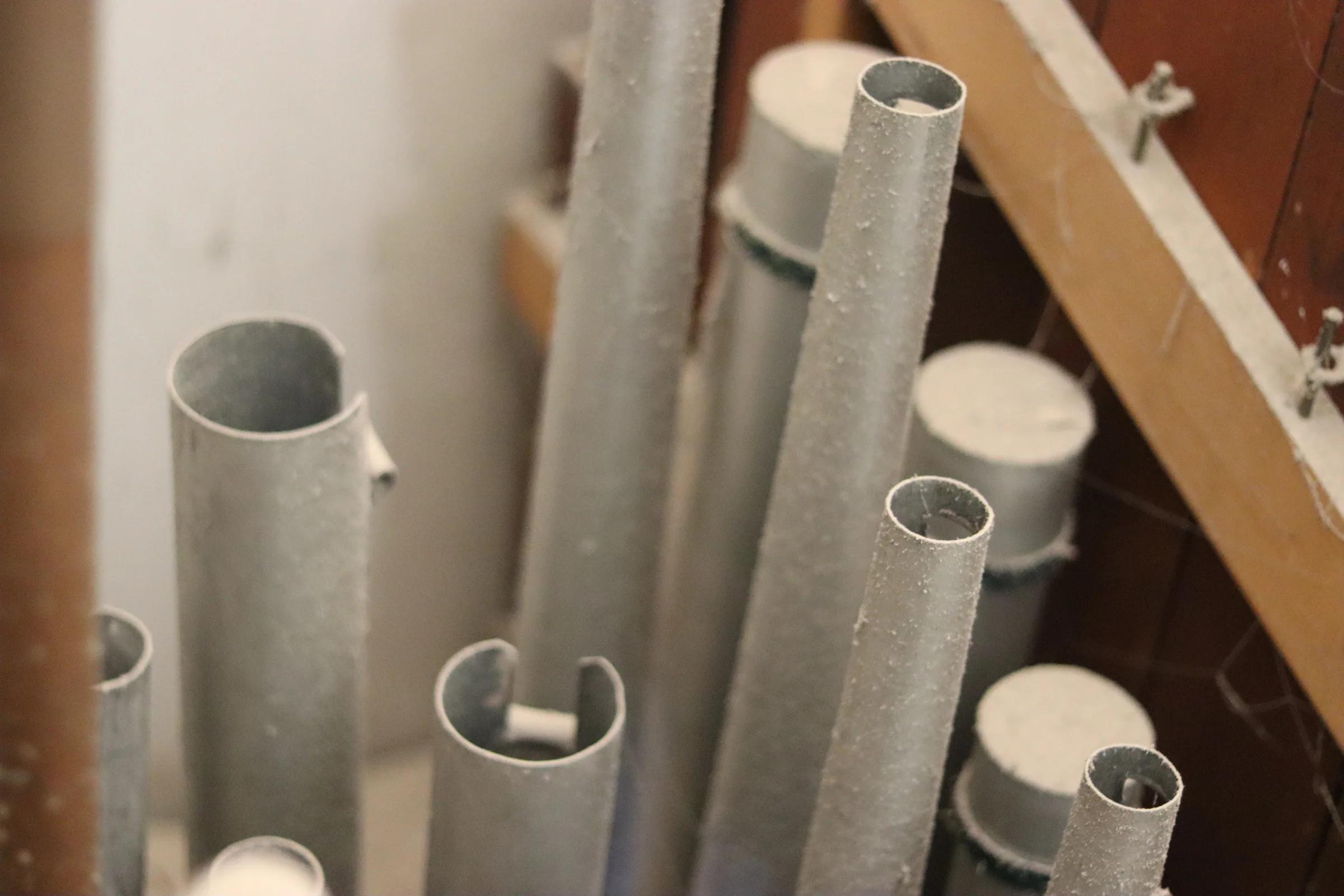
- Flue pipes work like a recorder. Air strikes the edge of the lip and sets the column of air in the pipe vibrating. The great majority of pipes in an organ are of this kind.
- Reed pipes have a vibrating metal tongue, similar to a clarinet. They give penetrating colours like the trumpet or oboe.
- Pipes are made of a tin and lead alloy or of wood. The material, width and shape determine the tone colour, and the length the pitch.
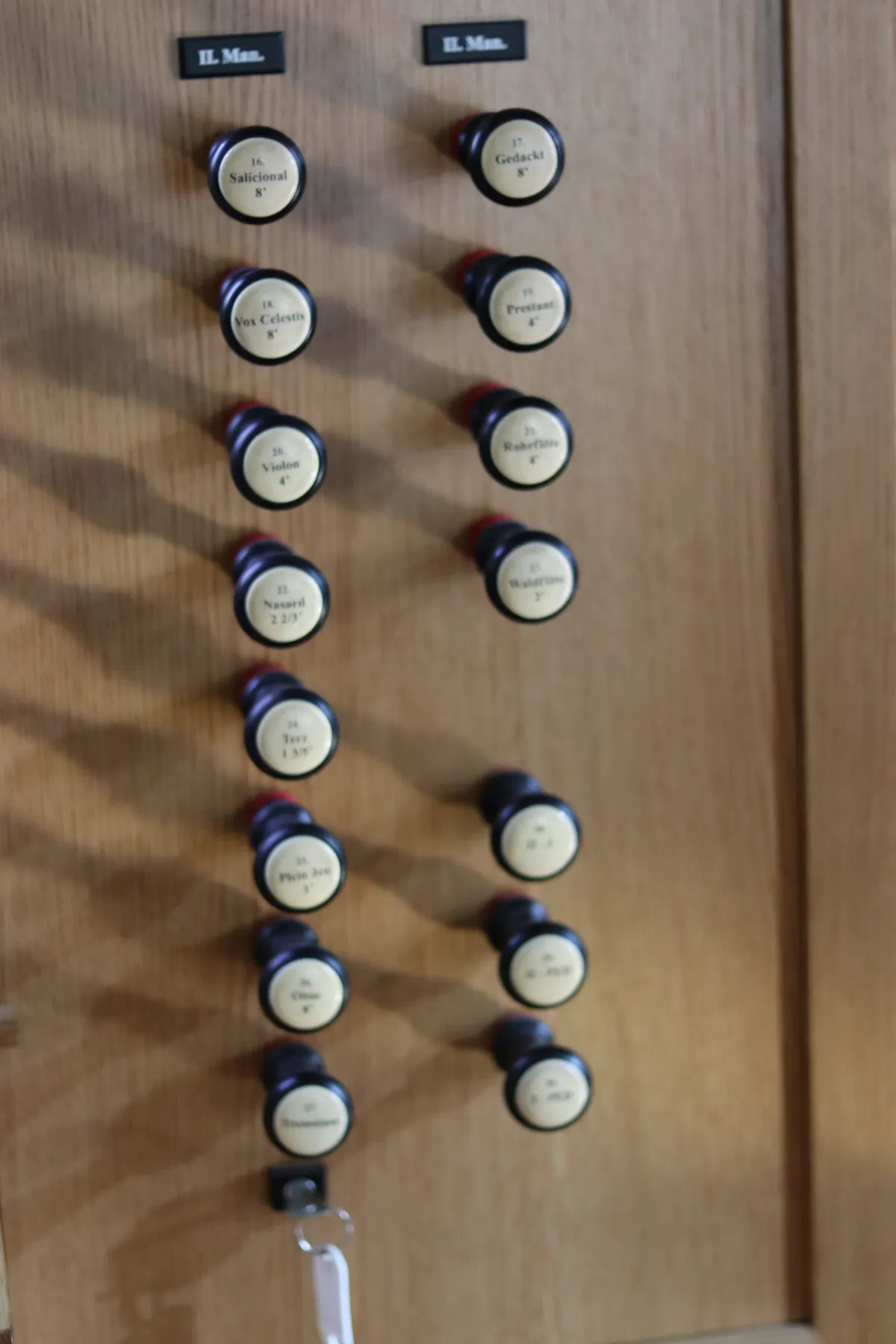
Markings on the stops, such as 8′ or 4′, give the length of the lowest pipe in feet. An 8′ stop sounds as written in the music, a 4′ stop an octave higher, and a 16′ stop an octave lower.
The console and the action
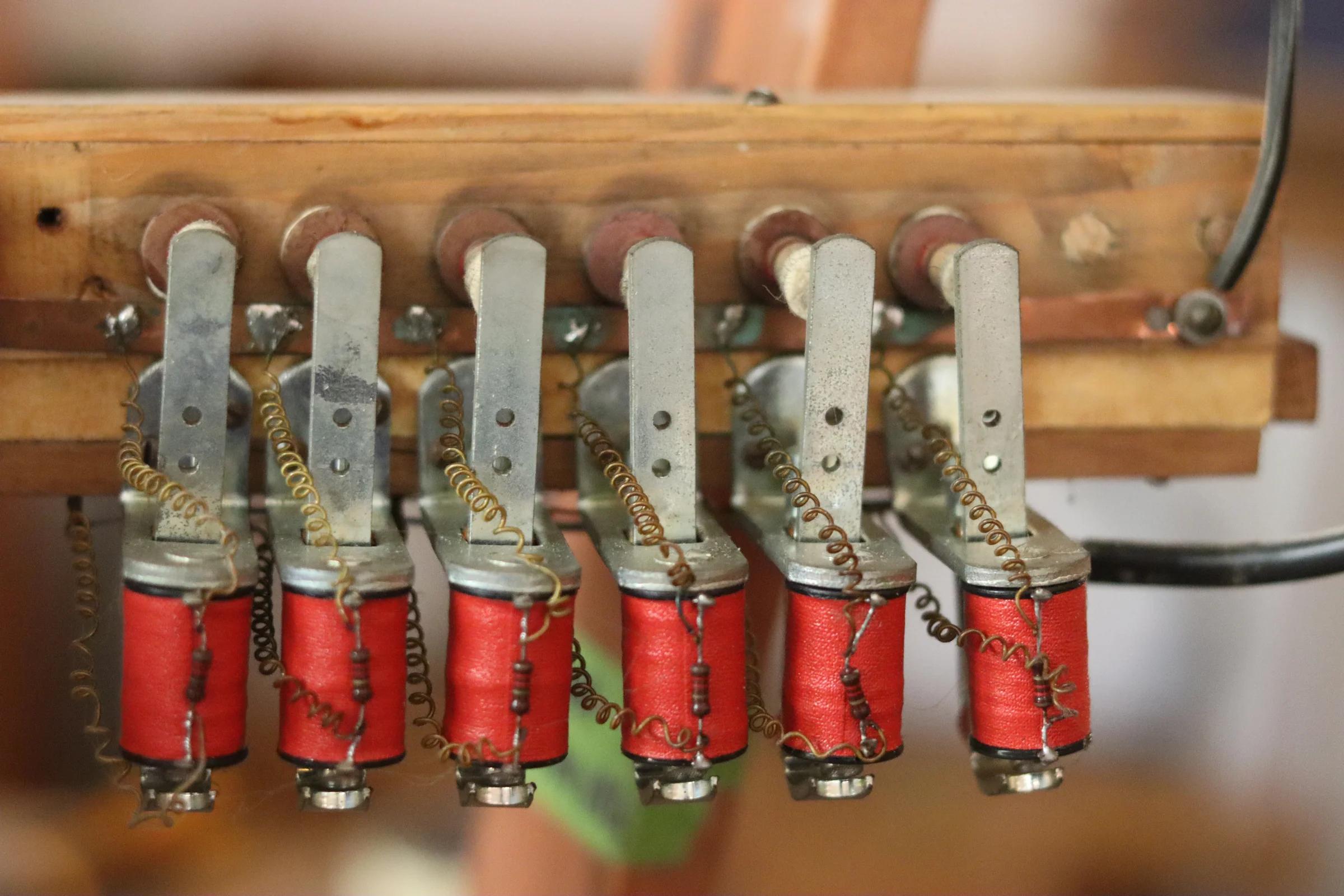
The console is the organist's workplace: one or more manuals for the hands, a pedalboard for the feet and the stop knobs. The link between the key and the valve is called the action. It can be mechanical, pneumatic or electric, and we write about the differences in a separate article.
Why every organ is different
Organs are not mass-produced. They are built for a particular space, according to its size and acoustics. The last and most delicate step is voicing: each pipe is adjusted individually until it sounds just right in that very church. That is why the same instrument in a different space would never sound the same.