About organs · 23 October 2026 · 4 min read
Mechanical, pneumatic or electric action: what is the difference?
The action is the link between the key and the pipe. It determines how the organ responds under the fingers, how reliable it is and how it is maintained.
When the organist presses a key, somewhere in the instrument, sometimes ten metres away, a valve beneath the right pipe has to open. The system that carries that movement is called the action. There are three basic kinds.
Mechanical action
The oldest and most direct system. The key is physically connected to the valve by thin wooden strips (trackers), squares and rollers. Under the finger the organist feels the moment the valve opens and can influence how the pipe speaks. A well-made mechanism lasts for centuries and can be repaired with ordinary carpentry tools. That is why we build new organs precisely with the classical mechanical system.
Pneumatic action
At the end of the 19th century, thin lead tubes replaced the mechanics. Pressing a key sends a puff of air which, at the other end, moves a small pneumatic motor and opens the valve. The keys are light and the console can be placed further from the pipes. The drawbacks are a delay in the tone and a large number of leather parts that age. Many organs in our churches from the late 19th and early 20th century have exactly this kind of system.
Electric and electromagnetic action
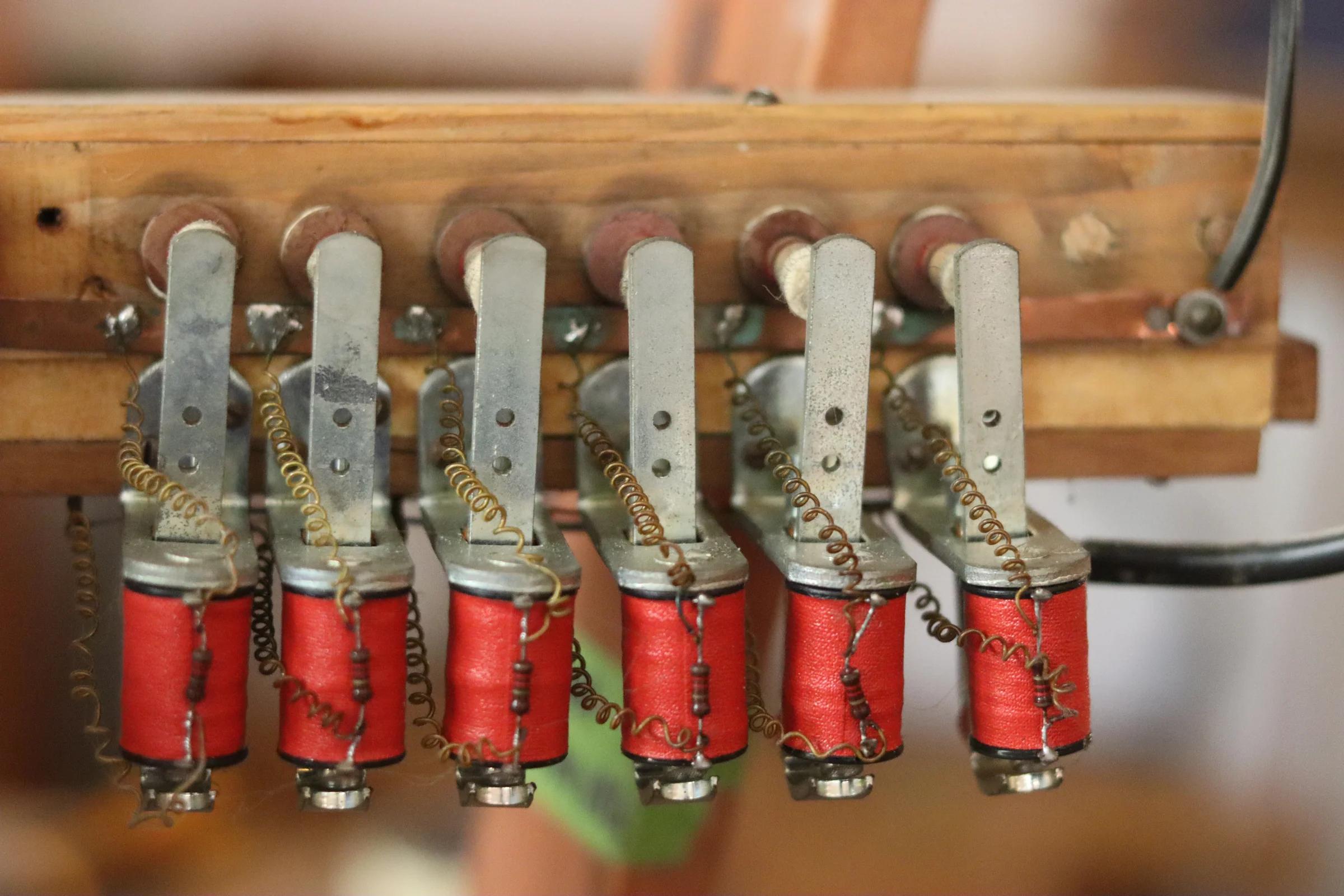
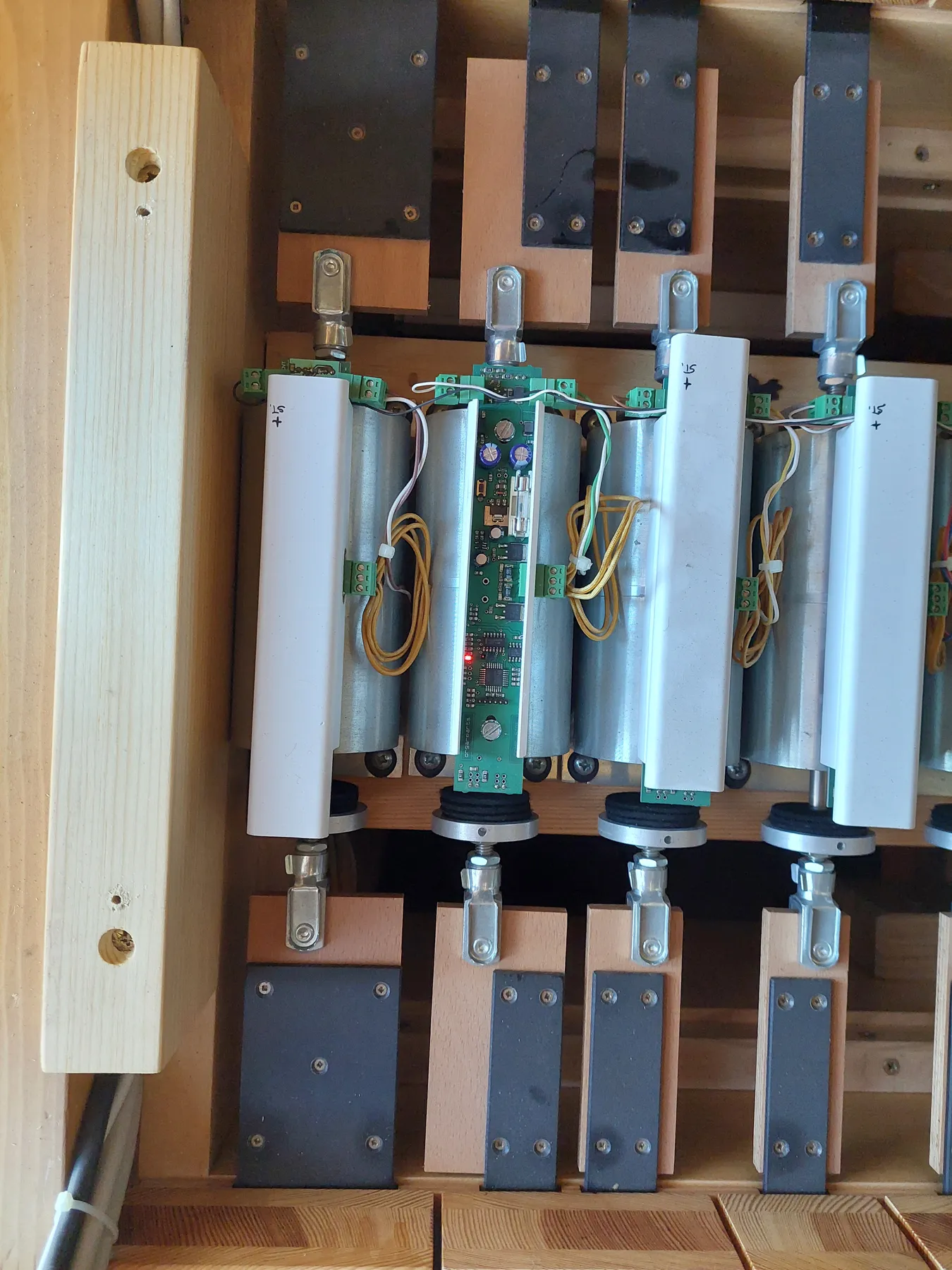
Here the key closes an electrical contact and an electromagnet opens the valve. There is no delay caused by distance, so the console can stand anywhere in the church. A modern digital version carries the signal over a single cable and allows combinations of stops to be stored.
Which is better?
- For new organs of small and medium size, mechanical action is the most durable solution.
- Historic pneumatic organs are generally worth restoring in their original system.
- Digital electromagnetic action is a good choice when the old system is beyond repair, when the console has to be separate from the organ or when the instrument is being extended.
We install digital electromagnetic action in both new and existing organs. Which solution is right for your instrument is best assessed on site.